

The smell of old hardback books, typewritten reports on crispy paper, smudges from an ink pen – these are some of the earliest of Swansea University’s Students’ Union’s council minute books at the Richard Burton Archives.
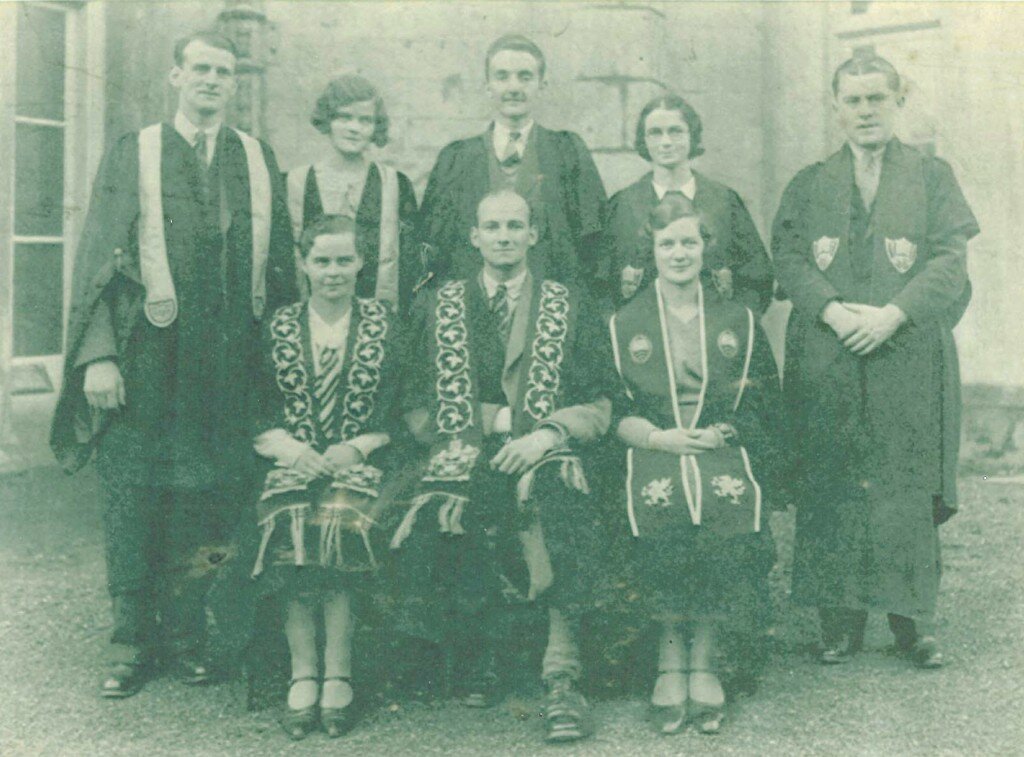
Central Student Representative Council 1931
Under the dust, lie records of political issues as well as discussions on the University’s social activities such as the tradition Welsh event Eisteddfod and Rag week.
In the early 1920s, Ivor W. Evans was announced the first president of the Student Representative Council – now the students’ union.
The first four presidents were ex-servicemen, which had a marked effect on the early years of the college and organisation of student activities.
Praise for achievements has also been given through the ages of the union.
As noted in council minutes in the 1950s the union expressed thanks to the one member who turned “what might have been a rather dull Going-Down [Breaking Up] day, into a day which had every appearance of going to be a most successful and entertaining one.”
Post-war Swansea University led to union debate on the very important matter of the contents of the refectory.
As one member said: “Now that the tea is off the ration, surely there was no justification for the tasteless brew served in the old refectory.”
Following this was the issue of the suspected vandalism of finding 70 broken glasses in the refectory one morning! The decision was never made of what to make of this.
The triumph of the Welsh national event, Eisteddfod, was a matter that arose many times during the 1950s. The University won the Chief Coral Competition for the first time and held the shield for the year.
In 1955, the University’s annual ball was apparently one event that the social committee had issues with, in regards to the entertainment.
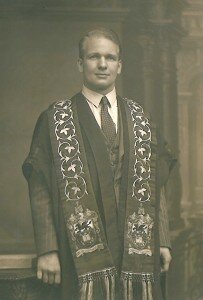
W.Aubrey Rees BA, President of Swansea University College 1938-9
The representative said: “I give assurance that the band that played at the Saturday night dance would not be heard in college again.” There were no details of who the band was!
The following year, one fading document stated how a member was concerned with ‘outsiders’ entering the university dances at the time: “On the questions of ‘bopping’; if the dance floor was full, it should be stopped.” I’m sure in today’s students’ union it would cause a few laughs.
As reported in a Swansea newspaper, the sudden death of Mr. Evans was announced in 1958, praising his achievements within the council.
In 1959, the matter of ‘bedtime’ arose in the meetings. A member suggested: “The authorities seemed to be moving towards having a set bedtime for men.”
Luckily, the chairmen said it “filled him with horror” and the idea was soon dismissed.
Moving to the political awareness in the 1950s, the S.R.C. were supportive of national as well as international events.
As the North Sea flooded parts of the Netherlands, Belgium, England and Scotland, the S.R.C. made sure charitable collections were completed to help the crisis.
One of the most welcomed ideas proposed in 1954 was the negotiations for a licensed bar on the premises. As a member said they were “scared it would lead the young astray”.
Obviously, this idea was well accepted, as the meeting ended with “big cheers” from the students with a majority vote leading to the current union bar, JC’s.
Unfortunately, at present, council minutes from 1961 to 1983 have yet to be uncovered. So a jump to the colourful 1980s and the notebook displaying a STRIKE! sticker on the cover, already sets the tone for some of the matters arising in that era.
The rise of the Anarchic was a main concern of S.R.C. Unlike the entirely peaceful Eisteddfod of the fifties, uproar began 30 years later when a number of students were assaulted and attacked by members of other universities.
Alongside this, an organised protest was set up in 1984 against government announcements that they were preparing to abolish minimum grants and make students pay their own tuition fees.
One shock of the day was when it was said that “a police van drove through the students’ union sign and split it in half”.
Students were most definitely out to make their statements clear in Swansea during this era.
With censorship becoming an issue towards the end of the 20th century, the film ‘The Evil Dead’ was withdrawn by the Film Society, but was never banned.
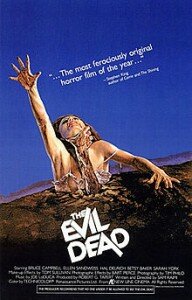
‘The Evil Dead’ film showing caused controversy at the university in the 1980s
During 1984, the matter of the film was discussed during committee meetings and eventually it was passed to be viewed by members of the society.
The handwritten minutes take up the matters of bilingualism in all sections of the union and university.
Any society that did not include Welsh, or if they damaged any paint work when advertising, were fined £5; the equivalent of around £20 today.
Doubletake, the main paper running through the eighties is also stored within the university archives.
The paper emphasises the importance of international concerns like the union and encourages the sending of letters to foreign governments with concerns such as the imprisonment of a lecturer in Santiago in 1985.
The paper was short lived and was converted to ‘Bad Press’ in 1986.
This is only a snippet of the students’ union history.
Luke James, the current president of the Swansea’s students’ union, uncovered the archives after finding out about them earlier in the year.
“When I was first elected, I got the standard tour of the union and part of that was visiting the archives.
“Amongst all of our old financial records were these amazing minutes’ books of the union’s history, dating back to the 1950s and beyond.
I approached the history department to see if they could help us bring our history to life.
“I met with Dr. Louise Miskell and Dr. Martin Johnes and they were both extremely supportive and we settled on a brand new module dedicated to the study of the students’ union history.
“Since then, the university’s archives have got involved and are busy cataloguing our archives and helping the history department put together material for the module.”
“It’s particularly interesting to see that some of the things our members argue and disagree about in the union now, are things we were arguing about 50 years ago.”
From January, the History department will begin their search into the documents and hopefully uncover moments within the past from political and governmental debates to some light-hearted, social matters still relevant today.
The documents are currently held in the Richard Burton Archives, Information and Services and Systems at Swansea University.
Published in the Waterfront on November 28, 2011.
Comment Below (Moderated)