

Issue 151
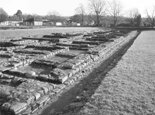
Roman Barracks at Caerleon Fortress
Caerleon Fortress
29th January 2007
Last term the Ancient Studies society went on a trip to Caerleon fort, president Gemma Strutt and vice president Shona Carnall tell us just what they got up to, and what the Ancient Studies society is all about.
The Ancient Studies society is a group of students who are all interested in Ancient History, Egyptology and Classics. They wanted to get rid of the stereotypical idea of old men with dusty books in dark rooms reading weird languages that few people understand and show that ancient history can be fun. Beer was the water of the ancients!
The society is very active and they provide a place where like minded people can get together and socialise. Not only that but they want to give people the opportunity to visit the places and see the objects that their lecturers are always talking about, because lets face it, seeing the Rosetta stone or an amphitheatre in real life is far better than a picture in a book. Like any society they have general socials, which in the past have included bowling and a trip to Lazerzone, they also have plans to hold lectures by known historians.
In December the society went to Caerleon Fort which was built for the Roman Legion II Augusta and was founded in AD 74/75. Most of the fort is hidden under the modern town of Caerleon, although the amphitheatre, barracks and bath-house have been fully excavated and are visible to the public. It would have housed 5,000 men at it speak, and was positioned on the route into South Wales, to control travel and trade. President Gemma Strutt tells us how they all got on.
"Arriving at 11pm with the sun shining in the sky, our fears of rain where disbanded. The first stop was the amphitheatre, being the best preserved and the only fully excavated one in Britain. Just to the left of the amphitheatre were the remains of a Roman building. I set our troops the challenge of telling me what it could have been. The best answer I received was a Roman McDonalds which made the actual use of the building as a small bathing area for the gladiators seem pale in comparison. I could just imagine the Mc Gladiator burger! Standing in the middle of the Amphitheatre you could not help but imagine the gladiators fighting each other or wild beasts.
"Our next stop was the Barracks which we explored from the stables to Roman latrines. Unfortunately the heavens opened and we all decided that it was the best time to have lunch. But not before discovering that the Romans of the Barracks house may have had vinyl records!
"After lunch, with the rainbows looking promising overhead, we headed to the Roman Legionary Museum. Whilst most of the party investigated the artifacts on display, Shona Carnall and Elizabeth May (who had volunteered there before) talked to the curator Mark Lewis. Their connection to Mark managed to get us into the Roman bath house for free! Here we were able to spot the Roman footprints that where preserved in the concrete, as well as a dog's paw print. The rest of the time however was spent wondering what 500 naked bathing Roman soldiers would have looked like in the bath house. The trip to Caerleon was very successful and enjoyed by all."
The society hold weekly meetings in the coffee house end of JC's at 1pm every Wednesday afternoon. This term the society have a range of trips planned including a day at the British Museum with the History society in February and a weekend at Hadrian's Wall in April. If you would like more information then please email them at: senate@swanseaclassics.co m or take a look at there website at: www.swanseaclassics.com
Waterfront Online